Layer2C LabsVendor reference experience

The Design Challenge · Four acts from real engagements

Which decisions are we trying to accelerate?
Who owns them today?

The strongest vendor story starts with an operating question. A Design Challenge carries one question from a working conversation into a challenged architecture, a measured lab, and a record the field can cite.

REFERENCE PROGRAM04 / 04
PROOFDESIGN
CHALLENGE
CONVERSATIONCHALLENGELABPUBLISH
ROAD TRIPLABSMEDIA
Start with decision friction.

Not “Which model?” but “Which decision?”

Design the authority boundary.

Accelerate action without removing accountability.

Carry one question throughout.

Video, challenge, lab, and field prompts share the same evidence.

The program · Act I to Act IV

Carry the decision through four acts.

The conversation fixes the question. The challenge makes the vendor answer it in the open. The lab makes the boundary observable. The published record lets the field cite all three.

How to read this pageEach act is illustrated with published work, chosen to show what that act looks like in practice. The lab runs whether or not a vendor pays for it: 18 of 19 published labs are unsponsored. Commissioned Design Challenges publish at their own destinations; the first is underway with Google Cloud. The selection and the argument are editorial, not any vendor’s message.

Act II · The challenge

Where the architecture gets worked, not rehearsed.

This is the beat a vendor is actually buying. The problem arrives from outside, their architects answer it on camera, and the answer gets pushed on while the field watches.

EngagementArticul8 · Sponsored content, not a design challenge. The same challenge beat inside an editorial interview.

Why RAG Breaks at Enterprise Scale, and What Comes After03THE CTO ADVISOR · DESIGN CHALLENGE

Reference film · Articul8

Why RAG Breaks at Enterprise Scale, and What Comes After

Articul8’s CTO takes the architecture question on camera. Keith brings the problem, the answer gets pushed on, and the assumptions behind it end up on the record instead of in a message track.

The CTO Advisor · Recorded before GTCWatch + read transcript ↗

The format flip

  1. 01

    Keith brings the problem

  2. 02

    The vendor works the solution

  3. 03

    Keith challenges the design

  4. 04

    Layer2C Labs validates

A rehearsed message meets an architect and dies. A challenged one survives the question an account executive usually needs a sales engineer to answer.

Act III · The lab

What the design does under test.

A design that has not run is still an opinion. The lab is where it goes onto real infrastructure, gets measured, and comes back with its limits attached. Most of these run because a question is worth answering, not because a vendor asked.

EngagementLayer2C Labs · 18 of 19 published labs are unsponsored, including the one leading this act. The second is sponsored by Kamiwaza and says so.

Lab 003 · Editorial, unsponsored

The validator determines done, not the loop

A local bug-fix agent was supposed to need a frontier tier to escalate to. Gated by a deterministic harness with every call metered, the same-tier repair loop returned nothing.

25% → 25%
Pass rate before and after adding the same-tier repair loop. No gain.
~5%
Share of tasks where same-tier repair actually pays, once measured.
~$4.60
Total metered cost across 156 API calls, published with the result.

What it does not prove.The task set is small. Eight tasks in the culminating run, 26 calibrated. Good for the architecture verdict, not a benchmark of pass rates.

Read the full lab ruling ↗Nobody commissioned this one. It is one of 18 unsponsored labs out of 19 published.
Inherit the boundary. Own the gate.04LAYER2C LABS · LAB 015

Reference film · Layer2C Lab 015

Inherit the boundary. Own the gate.

The lab build behind the ruling: a bench of analysts, one vendor each, running the same assessment instrument on Kamiwaza workrooms. The question is whether the platform keeps every analyst inside the evidence the curator approved.

Layer2C Labs · KamiwazaWatch the lab ↗

Lab 015 · Sponsored precedent

241
Retrieval hits under adversarial cross-vendor querying. None crossed a workroom.
42 of 42
Claims grounded in the asking workroom’s own corpus, checked by a deterministic resolver rather than by reading.
0
Citations that reached into the other analyst’s vendor material.

What it does not prove.Nothing here is a security result. Every account was authorized and acting in good faith. One deployment, one release, two workrooms, one assessment workload.

Read the full lab ruling ↗Kamiwaza sponsored this lab. They did not choose the vendors or see the production instrument, and the record states that the findings include the ones they would not have chosen.

Act IV · Publish and activate

Publish the record. Let the field cite it.

The findings become a record a person or an assistant can retrieve. Every assessment, lab, and transcript turns into grounded context for the prompts the field carries into a customer conversation.

ArtifactsThe standing corpus: 27 independent vendor assessments, 19 lab records, and the router at labs.layer2c.com/llms.txt. Plus the HPE-sponsored paper below.

A sponsored publication · what one looks like

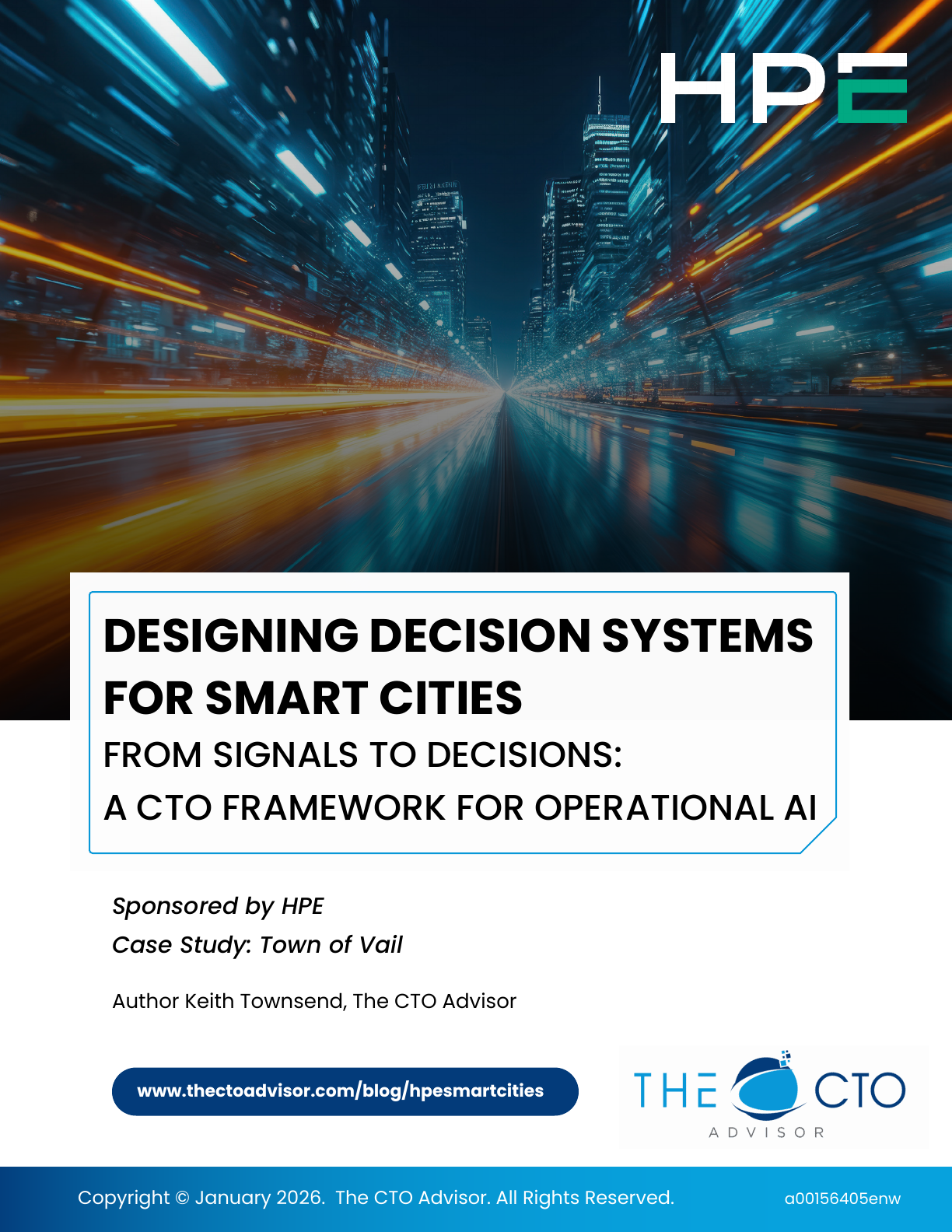
Cover of Designing Decision Systems for Smart Cities

HPE-sponsored paper · January 2026

Designing Decision Systems for Smart Cities

“Sensors everywhere, decisions nowhere.”

The published record from the Vail work: a repeatable CTO framework that starts with decision friction, designs the human and AI loop, builds shared capability, targets mundane cross-department decisions, and orchestrates an ecosystem rather than a product stack.

Read the 14-page paper ↗

The activation layer · AEO / GEO

01

Architecture discovery

“Map this customer’s current AI architecture across the 4+1 layers. Identify which decisions are Retained, Delegated, or Ceded, and give me the five questions needed to validate the map.”
First meeting · Architecture workshop
02

Competitive positioning

“Compare our platform with the customer’s incumbent for this workload. Use the Layer2C assessments and labs to distinguish capability from authority, cite the evidence, and name what remains unproven.”
Account planning · Technical validation
03

Customer follow-through

“Turn the findings from this conversation into a Design Challenge brief: one testable architecture question, the authority boundary, success metrics, evidence required, and the next workshop agenda.”
Solution design · Next-step activation
Grounded in the research, not generated from a battlecard.

The response carries the relevant Layer2C assessment, lab ruling, transcript, evidence limits, and disclosure. The claim is corpus presence, never ranking or placement.

What the vendor walks away with

Evidence with a longer half-life than a launch.

01

A sharper story tied to an enterprise architecture decision, answered in the open rather than rehearsed.

02

A credible proof set spanning video, measured lab work, and editorial analysis.

03

An account executive who cites instead of claiming, and can hold the architecture conversation without a sales engineer in the room.

Bring the architecture. We’ll bring the hard question.

What does your platform need to prove?

Start the design challenge Sponsored research · Independent judgment · Full disclosure · Machine-readable record